

Hydration is one of the most important factors in maintaining overall health and avoiding potential complications, especially among higher-risk patients. Here are some tips for keeping your patients and residents happy and hydrated.
Hydration plays a critical role in maintaining health and preventing complications, especially in vulnerable populations such as those in healthcare settings. Water is distributed throughout the body and accounts for about 75-85% of the body’s total weight in normal weight individuals. Water plays a key role in cellular metabolism by carrying nutrients and waste, lubricating the joints, regulating temperature, and maintaining blood volume.
Dehydration occurs when body water output exceeds the amount of fluids consumed. Body water losses occur through perspiration, respiration, urination, and the gastrointestinal (GI) tract. Losing 10% of body water can damage essential body systems, and losing 20% may cause death. The body cannot store water, so the amount lost every 24 hours must be replaced to maintain health and body function.
Identifying and Assessing Hydration
In a health care setting, the registered dietitian nutritionist (RDN) identifies individuals at risk for dehydration through a comprehensive nutrition assessment. As part of the nutrition care process, the RDN can effectively determine a resident’s hydration status, calculate an individual’s fluid needs, and promptly address concerns by developing a care plan to ensure adequate fluid intake to support proper hydration and overall health.



Evaluating hydration status is also a key component of the nutrition-focused physical exam. When assessing for dehydration, the RDN will observe for physical signs such as dry lips or mucous membranes and reduced skin turgor. Significant weight loss over a short period of time may also signal dehydration. A review of the medical record and discussions with nursing staff to evaluate urine output, concentration and/or decreased volume may also be used during the assessment. Additional symptoms like headache, dizziness, confusion, constipation, fever, sunken eyes, and falls can further support the assessment.
Water, Water Everywhere: Providing Adequate, Preferable Liquids
Once fluid needs have been determined, the goal is to offer sufficient fluids based on individual needs and personal preferences. The goal is to maintain hydration, prevent dehydration, and support overall health.
- Ask the individual what beverages they enjoy and provide these beverages throughout the day.
- Encourage the individual to sip beverages served with and in between meals, and to drink water regularly.
- Use water bottles, cups or glasses that the individual prefers and place it within reach to promote hydration.
- Offer substitutions for beverages the individual doesn’t like.
- Work with caregivers to provide assistance as needed, monitor intakes, and let you know if there are concerns.
Caregivers should be trained to notice if an individual is not drinking adequate fluids and the steps they should take for appropriate intervention.
Unique Challenges for Individuals with Dysphagia
Individuals with dysphagia may face challenges with fluid intake, especially if they require thickened liquids. These individuals are at increased risk for dehydration, so it is important to provide extra fluids between meals. One way to meet fluid needs is to provide 8 ounces of additional fluids at each medication pass.
For more tips on how to support individuals with dysphagia to meet their hydration needs, refer to Managing Hydration with Dysphagia, which includes a helpful list of strategies to increase fluid intake.
How Surveyors will Assess Hydration in Healthcare Facilities
During a regulatory survey, surveyors may check for signs of poor fluid intake among residents/patients. If issues are found, they will assess risk factors for dehydration and observe whether the individual receives appropriate assistance as needed to drink and is provided with adaptive equipment if appropriate. Additionally, surveyors will monitor what actions are taken when a resident refuses fluid. For more information on CMS surveys in nursing facilities, check out the “Hydration Critical Element Pathway.”
Final Thoughts
Staying hydrated can be challenging for some individuals. When caregivers take the time to learn individual preferences and monitor fluid intake closely, the risk of dehydration is significantly reduced. Simple practices like offering preferred beverages, encouraging small sips throughout the day, and providing extra fluids (especially for people on thickened liquids) can make a big difference. Prioritizing hydration is not just about meeting a basic need; it’s about supporting overall health, comfort, and quality of life for every individual.
Estimating Fluid Needs
While there are different ways to assess fluid needs, two common methods are outlined here.
- Using weight-based estimates:
- 30-35 mL/kg for average healthy adults
- 30 mL/kg for adults 55-65 years old
- 25 mL/kg for adults 65 years of age or older
- 25 mL/kg for heart failure or renal disease
- 35 mL/kg for patients with infection or draining wounds
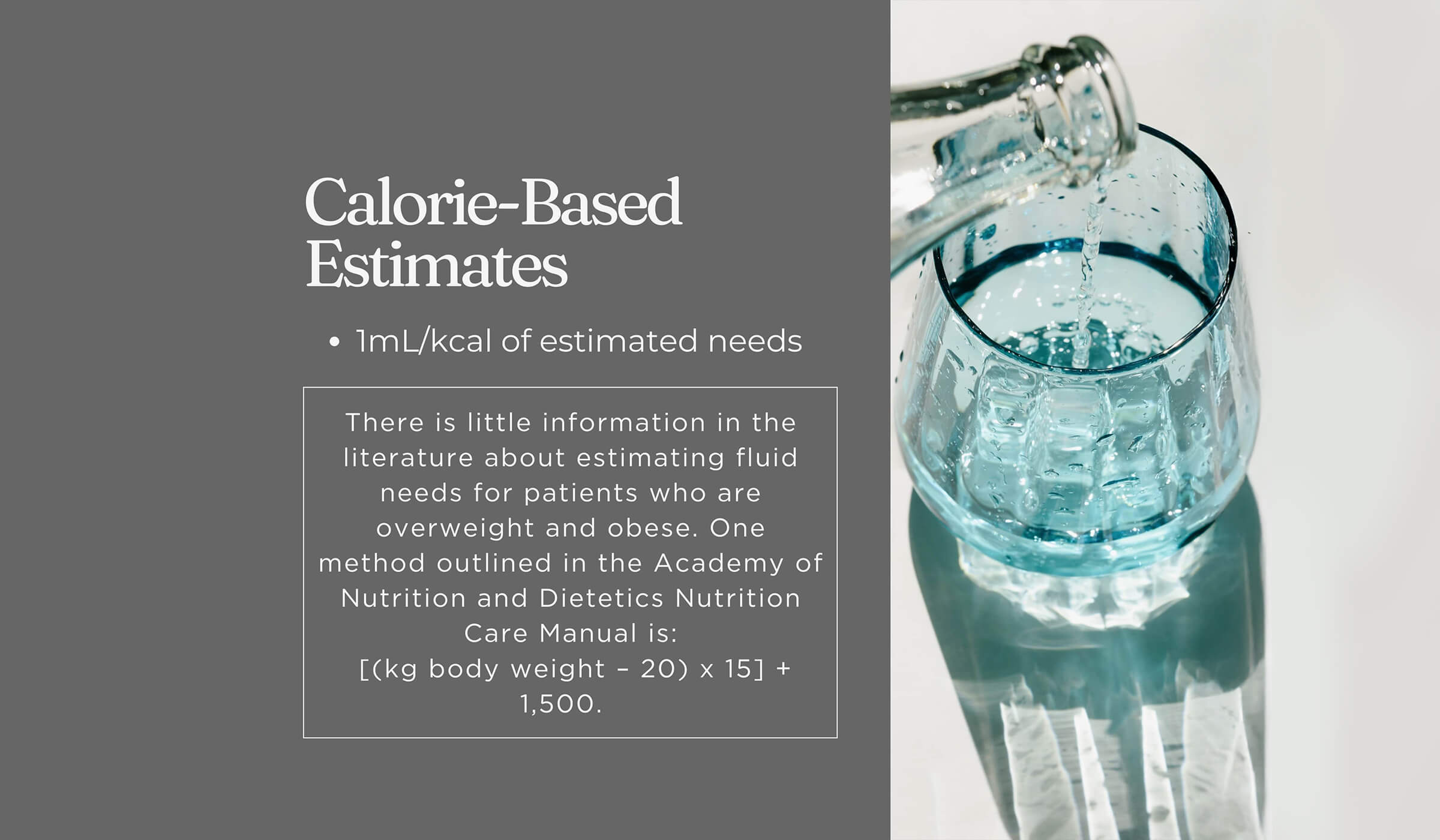
- Using calorie-based estimates:
- 1mL/kcal of estimated needs
There is little information in the literature about estimating fluid needs for patients who are overweight and obese. One method outlined in the Academy of Nutrition and Dietetics Nutrition Care Manual is: [(kg body weight – 20) x 15] + 1,500.
References
- Dorner B. Diet and Nutrition Care annual: Comprehensive Edition. Becky Dorner & Associates. Dunedin, FL. 2024.
- Charney P, Malone A. Nutrient requirements. In: Charney P, Malone A. Academy of Nutrition and Dietetics Pocket Guide to Nutrition Assessment. Fourth edition. Chicago IL: Academy of Nutrition and Dietetics. 2022;220-242.
- Academy of Nutrition and Dietetics Nutrition Care Manual. https://www.nutritioncaremanual.org/. Accessed April 8, 2025.